Productive Farmland and Scenic Views Conserved in Thetford

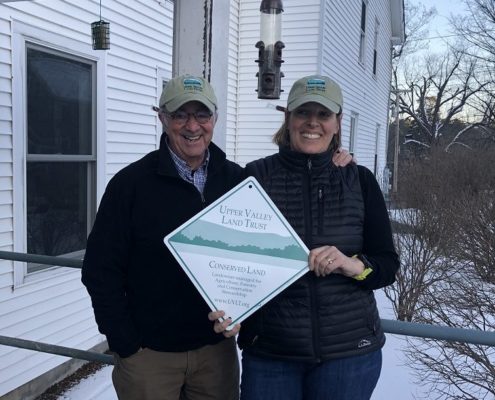
ACADEMY ROAD, THETFORD, VT—Through a grant from the Vermont Housing and Conservation Board (VHCB) and donations from the Thetford Conservation Commission and the Upper Valley Land Trust, Thetford landowner Lilla Willey signed documents on Monday to permanently protect 51 additional acres of her scenic farmland on Academy Road. The signing of the conservation easement and the small celebration that followed took place at the Upper Valley Land Trust’s office on Buck Road in Hanover. The Upper Valley Land Trust (UVLT) will be responsible for ensuring that the development restrictions included in the easement are adhered to in the years to come. The successful completion of this conservation project was made possible through a generous bargain sale of development rights donated by the landowner, which leveraged federal, state and local grant funding.

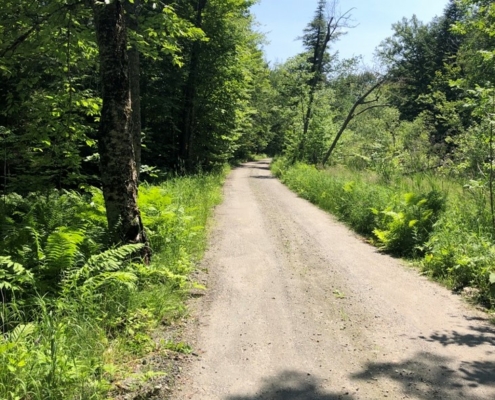
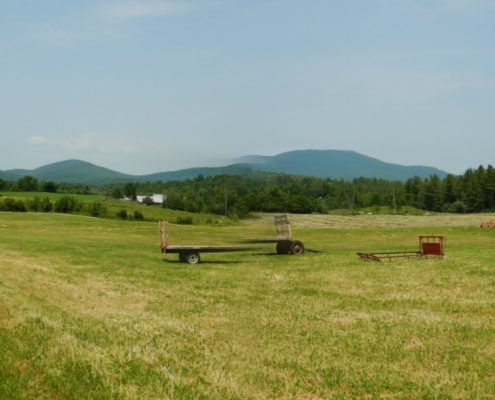
According to Li Shen, Chair of Thetford’s Conservation Commission, “If this land were not conserved it would become, no doubt, a highly desirable site for subdivision and development.” The recently conserved land includes almost 1,000 feet of road frontage on Academy Road and a sizeable open field, which combine to allow passers-by to glimpse scenic views of Mt. Cube, Smarts Mountain, Cardigan Mt., Holts Ledge, as well as the more distant Mt. Moosilauke. Academy Road is a town-designated scenic byway and has been selected as, “One of the highest priorities [for protection] for the municipality,” according to Thetford Selectboard Chair, Tig Tillinghast.

In addition to being scenic, the open field is very productive. It is made up of prime agricultural soils, as well as soils of statewide significance. These fields are hayed and leased by a local farmer and also used as horse pasture.

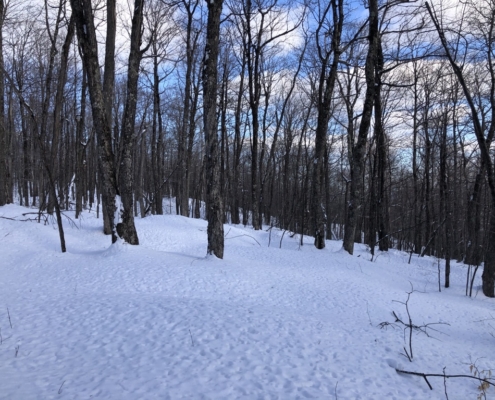
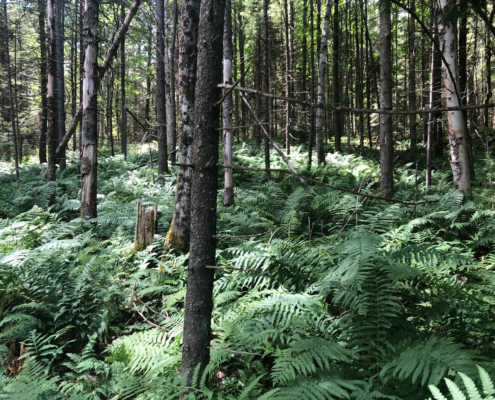
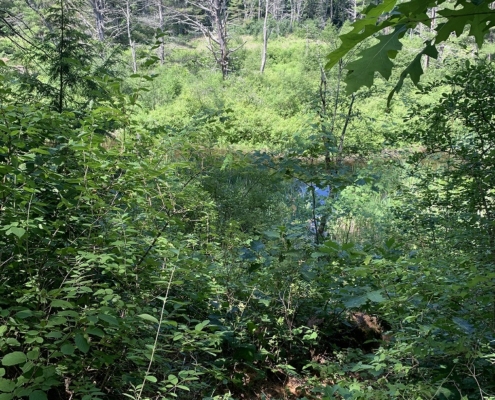
Approximately 28 acres of the property is managed forestland. Notably, this includes a stand of Norway spruce. The remaining forestland is characterized as a hemlock/hardwood forest. In addition to open farmland and the mixture of forest communities, the property includes two ponds and a small amount of wetland.

The Willey property also serves as an important scenic buffer to the award winning trail system on the nearby Thetford Hill State Park land. The trail system may be extended at some point in the future, since the conservation easement granted by Lilla Willey includes provisions for the possibility of future public access.

The protection of the Willey farmland adds to the already 377 acres protected within the immediate vicinity. These protected lands include Thetford Hill State Park, and two privately owned parcels, both conserved with UVLT. In total, there are 490 acres conserved by UVLT within 5 miles of the Willey Farm and an additional 1,400 acres of other protected lands. Current and future generations of Thetford residents and visitors will be able to enjoy the recreational, scenic, and agricultural uses that these conserved lands have to offer.

Thetford Celebrates Protection of Zebedee Headwaters

On Wednesday, January 20, the Upper Valley Land Trust purchased the 27.3 acre property known as Zebedee Headwaters, on Houghton Hill Road, Thetford Hill. Under the ownership of UVLT, the parcel will be protected from future development. UVLT will continue to manage the land as it has been, for wildlife habitat, as well as for educational and recreational purposes. This purchase was made possible through the support of the Upper Connecticut River Mitigation and Enhancement Fund and the Children’s Fund, both of which are administered through the New Hampshire Charitable Foundation – Upper Valley Region. Additional funds came from the Thetford Conservation Commission and through an outpouring of community support.

Some successful fundraising efforts were led by Thetford Elementary School students, including a Christmas Eve bake sale and outreach through the social networking website, Facebook. Connie Snyder of the Thetford Conservation Commission said of the bake sale, “It was beautiful to see the kids jumping up and down hailing down cars and to see the generosity of people who brought goods and bought goods – many did both.”

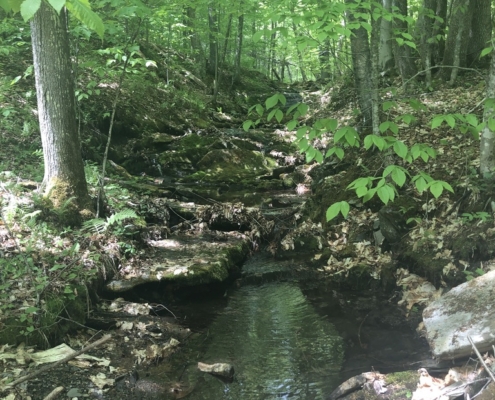
Zebedee Headwaters is an ecological asset to the community and is enjoyed by visitors and residents alike. The Thetford Conservation Commission created a list of a variety of wildlife species that benefit from the property, including two birds listed as species of special concern in Vermont. While the parcel is renowned by bird-watchers and wildlife enthusiasts, the large wetland on this property also serves as a living outdoor classroom for local schoolchildren. Its proximity to both Thetford Elementary School and Thetford Academy makes it a critical resource for natural science educators. In recent years, the second grade curriculum at the elementary school has included wetland and forest studies conducted on the property. In addition, a Valley Quest adventure has also been written and published for the property. Though, the quest was “closed,” while the property was marketed for sale.

Prior to UVLT’s purchase of the property, the previous owners had received development permits and placed the parcel on the market for residential development. As approved, the proposed driveway, accessing the only buildable area in the back corner of the property, would have skirted the wetland edge and required two crossings. Such development would have fragmented important wildlife habitat and degraded the connectivity of the uplands to the wetland. It would also have diminished the recreational and educational values of the property.

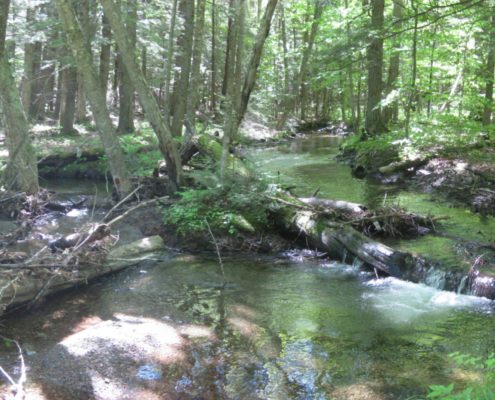
Nearly half of the property consists of Class II state-significant wetland communities. The wetland filters the headwaters of Zebedee Brook, and is one of only two state-significant wetlands located along this direct tributary to the Connecticut River. Development of the parcel would have increased detrimental runoff and potentially diminished the wetlands’ ability to adequately provide water filtration services. This would have been especially problematic, as this property is located between two groundwater protection areas—one serves the Thetford Hill Village Water District and the other serves the two nearby schools.

This property is adjacent to State forest lands, near other UVLT-conserved land, and its conservation increases the contiguous protected acreage of these parcels to about 150 acres. UVLT’s recently acquired 97 acre Pegjack Forest, also on Houghton Hill Road, lies about 1 mile north of this conserved block.

UVLT will host a community celebration at the Thetford Hill Congregational Church on Saturday, January 30, from 1 – 4PM. Refreshments will be served. Attendees should bring outdoor clothing for a walk to the newly conserved property (weather permitting). This event is free and open to the public.

Town of Unity Celebrates Gift of Conserved Memorial Forest

Laura Ryan feels strongly connected to an 83.5 acre parcel of land that has been in her family for more than 250 years because of the many memories and family stories this land holds. Due to her connection to the property, Laura Ryan, and her husband, Walter, generously granted a conservation easement to the Upper Valley Land Trust to preserve the land forever. Immediately following this donation, the Ryans transferred ownership of the property to the Town of Unity. Together, these gifts created “The Nathaniel & Ina Thurber Memorial Forest,” named in honor of Laura Ryan’s parents. The Memorial Forest will be managed sustainably by Unity’s Conservation Commission for low-impact recreation, agriculture and working forestland. The deed signing occurred at the Town Offices where Selectmen and others were on-hand to give warm thanks to the Ryans for this special gift to the community.

Asked why she chose to donate an easement to UVLT, Laura Ryan explained, “I grew up there; I didn’t want to chop it up anymore than it had been.” She also mentioned that she still enjoys the property, for example, “I try to get up there every few years to take my grandchildren kite flying.”

As is the case for much of New Hampshire’s landscape, The Nathaniel & Ina Thurber Memorial Forest was cleared, farmed, and now much has returned to forestland. Over the years, cattle, sheep and horses have grazed the land. Unity’s Conservation Commission plans to maintain some open fields in order to preserve scenic vistas, which stretch both north and south from the property. In the warmer months, these open fields offer picnicking opportunities, and the forested portion of the property is popular during hunting season. Historically, the forest was also used for maple sugaring, and a stone foundation of a historic sugar house is believed to be located on the conserved property.

The Conservation Commission will develop a Forest Management Plan prior to forestry activities, as required by the conservation easement. The Commission also plans to maintain the recreational trails that traverse the property for the public’s enjoyment. Former forester, and Chair of the Conservation Commission, Stan Rastallis said at the closing, “There’s a pretty good system of trails—it’s a matter of maintaining them.” He also said of helping with the project, “It’s been fun being in the woods again.”

Due to the generosity of the Ryans and the support of the Town and the Conservation Commission, UVLT will now ensure that this property will forever remain a part of Unity’s working landscape, and available for public enjoyment of its scenic values and recreational opportunities. This project is UVLT’s second in the town and the parcel is located within two miles of 350 acres of other public or town-conserved lands.

Neighbors Unite to Protect Wildlife Habitat and Working Forestland

Kathy and Lee Larson have played active roles in the Upper Valley’s land conservation community since moving to the Upper Valley and purchasing their land on Pout Pond Lane more than 10 years ago. Kathy Larson is a Trustee and Lands Committee Chair of the Upper Valley Land Trust. Lee Larson serves on the Lyme Conservation Commission, and has assisted UVLT with boundary monitoring and trail maintenance. The desire to see their property protected for wildlife, responsible forestry, and recreational purposes has led the Larsons to donate a conservation easement to UVLT. The Larsons signed documents conserving 64 acres of their property at a small gathering of friends and neighbors on Monday, December 28.

This project secures the protection of the many conservation values carefully stewarded by the Larsons for the benefit of generations to come. Certified as a New Hampshire Tree Farm, the Larsons’ property has a forest management plan in place that ensures sustainable forestry and encourages wildlife habitat protection, particularly for songbirds. The Larsons have consulted with Audubon biologists to carefully improve habitats necessary for the many migratory songbirds that stopover on the property, or stay during the nesting season. These efforts to steward quality habitat have led to the property’s name: “Songbird Forest.”

In addition to songbirds, the property provides high quality habitat for other wildlife. The Larsons have set up a hidden camera in a portion of the property that is a corridor used frequently by wildlife heading to Pout Pond. This camera has captured images of turkeys, fox, coyote, deer, bear, moose, mink, raccoon, skunk, opossum, painted and box turtles, and squirrel.

Songbird Forest fits into a large and growing corridor of conserved lands that stretch from, and are visible from, the Appalachian Trail corridor. The property is surrounded on three sides by other conserved land; large tracts of UVLT-conserved land are located within two miles, including Demmick Hill and Trout Pond Forest.

This cluster of protected properties continues to grow. Nearby, a 7.44 acre portion of the Elder Farm on Acorn Hill Road, owned by Ray and Tina Clark was also recently conserved with UVLT. According to UVLT Project Manager, Sara Cavin, “Though small, this piece of the Elder Farm has important connections to this other protected land, enhancing specific views, and maintaining the integrity of the agricultural uses that have gone on in the region.” Within two miles of this portion of Elder Farm are 950 acres of land conserved by UVLT, as well as more than 1800 acres of other conserved or public land.

In addition to the recent conservation of part of Elder Farm and the Larsons’ Songbird Forest in Lyme, another local family is currently working with UVLT. This project will likely be completed in early 2010, and its completion will complement the hundreds of acres of permanently protected open space and wildlife habitat surrounding Pout Pond and Trout Pond in Lyme. Together, these conserved lands provide many benefits including scenic views, water quality protection, wildlife habitat connectivity, as well as serving as examples of productive and sustainable land management practices. This group of projects demonstrates the impact that neighbors working together can have on the future of a landscape.

Wildlife Habitat and Open Space Conserved in Hanover

When Ann and Harte Crow purchased their land in northeast Hanover over thirty years ago, they thought of naming the place “Pressey Brook Farm.” But says Harte Crow, “that seemed awfully pretentious,” for the landscape they had come to know. Instead, their family affectionately refers to the land as “The Dismal,” in honor of The Great Dismal Swamp in the southeastern U.S. The land is wet and portions are often flooded due to a hearty population of beavers that is active near the confluence of several brooks. These brooks, Pressey and Tunis, join on the property to create a large wetland complex. Pressey flows from a height of land near the Lyme/Hanover border and Tunis comes off of Moose Mountain; together these brooks serve as a watershed for Goose Pond and the Mascoma River.
The Crows recently donated a conservation easement on their 239-acre property to the Upper Valley Land Trust. This agreement will ensure the permanent protection of this land.

The Crows have owned the parcel since the 1970s and actively manage it for wildlife habitat and personal recreation. They brush hog about five acres of meadow in order to create optimal bird habitat. Woodcock aficionados have told them that the habitat here is some of the best for the bird in the Upper Valley. Other visitors to the property report that bobcats, otter, mink, wood turtles and muskrats also use the land.

This project serves to support the Town of Hanover’s goals for habitat, scenic and open space protection. Publications, including the Hanover Open Space Priority Plan and the Scenic Locales Report speak to the attributes of the land in this area.

The Crow property lies within a focus area identified by the Quabbin to Cardigan Partnership (Q2C), a collaborative, landscape-scale effort to conserve the Monadnock Highlands of north-central Massachusetts and western New Hampshire. Q2C recently awarded the Upper Valley Land Trust a grant award to fund transaction related expenses for this and another nearby project.

The parcel is positioned within a 25,000 acre block of minimally fragmented forest land that extends to bordering towns of Canaan, Lyme, and Dorchester. As a whole, this large block serves as important winter habitat for moose and deer, as well as a rich and diverse habitat for bear, turkey, beaver, coyote, and grouse. Appalachian Trail Corridor and multiple Town-owned parcels are situated within a mile of The Dismal.

Strafford Sugarbush Conserved for the Future

On December 16, Susan Baker signed documents protecting her 212 acre property, located off Sawnee Bean Road in Strafford. She did this in honor and memory of her late husband, Chas Baker, who purchased the land and invested his time and energy in developing and maintaining a sugarbush and sugarhouse on the property. The conservation easement, now held by the Upper Valley Land Trust, will prevent future development of the land.

For the last several years, Susan Baker has leased the property to other local sugar-makers, most recently Tig and Elise Tillinghast. “Although I never met Chas Baker, sugaring this property over the past two years has, in a way, given me a chance to get to know him a little. His love for the sugarbush is obvious from how he maintained it, and he put a lot of thought into how he would like it to develop in the future,” says Tig Tillinghast. According to the Tillinghasts, the sugarbush has recently yielded about 520 gallons of syrup annually. The property is completely wooded, except for a five acre state-mapped Class II wetland, locally known as Cook’s Swamp, which is situated on the lower portion of the property between Cook’s Hill and Davidson Hill. Presently the wetland is actively used by beavers. Moose, deer, fox, and more than 40 documented species of bird also frequent the property.

According to Elise Tillinghast, “One of the great aspects of this property is the prime bird habitat, and it’s something we’ve had fun exploring with more knowledgeable people. For example, this past year, Audubon biologists identified three mated pairs of Canada Warblers, a fairly uncommon songbird that’s in decline throughout its breeding range.” Due to the role it plays in providing valuable bird habitat, Audubon Vermont has been supportive of the property’s protection.The parcel is distinguished by its proximity to other protected lands. It is located about one half mile east of the 924 acre State of Vermont’s Podunk Wildlife Management Area and in close proximity to more than 850 acres of other conserved land in Strafford and Thetford. Some of Susan Baker’s recently conserved land abuts hayfields used by a local family. In addition, the protected scenic hillside is visible in areas of Thetford and New Hampshire. Overall, the conservation of this land will help to support healthy wildlife populations, provide scenic open space and ensure the availability of local maple syrup for years to come.

To learn more about the Tillinghast’s sugaring operation, please visit http://www.freshmaplesyrup.com/

The Tillinghasts posted a blog entry about the conservation of this land, read it at http://www.freshmaplesyrup.com/maple-sugar-bush-permanently-conserved/

Weathersfield Wetland Conserved with Upper Valley Land Trust

A 38-acre parcel of land owned by John and Fran Wright in the Perkinsville area of Weathersfield is now permanently protected from development. The conservation easement ensuring the land’s protection was signed on Friday, December 11. The easement will be held in perpetuity by the Upper Valley Land Trust.

The property has been in Mr. Wright’s family since 1796. It was passed to him through a long line of ancestors. Mr. Wright’s great-grandfather farmed the land (sheep and cattle) and his father grew up in the area. It is this lengthy history of ownership that motivated the Wrights to protect the property for future generations.

The protection of the parcel includes more than 4000 feet of frontage on Mill Brook, as well as a state mapped, Class II wetland. Route 131 runs through the parcel. In the winter, a snowmobile trail passes over the Wrights’ property, crossing the brook over a wooden bridge, which VAST maintains. The property lies between Mount Ascutney State Park and Little Ascutney Wildlife Management Area. It is about one half mile from 450 acres that were protected by UVLT on the south side of Mount Ascutney with the help of the Weathersfield Land Protection Association and the Conservation Commission.

The protected property is primarily forested. It is not in current use and has been left alone for about 50 years. Because of this, there are high quality maples throughout the parcel. According to a Connecticut River Joint Commissions report, the condition of Mill Brook is excellent, waters are clear and cold, and it supports fine wild trout habitat. The property supports an abundant amount of wildlife, including beaver, moose, deer, and an occasional bear. In addition, a sandy bank provides habitat for turtles.

An endangered plant in the State of Vermont has been identified within one mile of the Wright Wetland. Additionally there are 22 more rare, endangered or threatened species identified in the Town of Weathersfield. The preservation of this land contributes to the future of biodiversity in the region, by retaining a habitat and corridor for native plants and animals to live and travel throughout the year.

Hartland's Lamb Farm Conserved with the Upper Valley Land Trust

On November 18, during a special meeting of the Hartland Conservation Commission, Anna Lamb signed documents that will ensure that the 67 acres of scenic open fields and forest that make up the Lamb Farm remain undeveloped forever. The Upper Valley Land Trust will uphold the conservation easement restrictions, while the family will continue to own and farm the land, and care for its many resources. Visible to travelers exiting Interstate 91, this land was preserved with funds from the federal Transportation Enhancements program through the Vermont Agency of Transportation. In addition, the Hartland Conservation Commission served as a critical partner, providing the matching funds needed to keep this working agricultural land available for future generations to enjoy.

The Lamb Farm is situated west of Route 5 in Hartland, VT in the Connecticut River Valley. It is a picturesque hillside farm along the lower eastern slopes of Tinkham Hill. More than 41 acres of open land on the property are among the first farm fields seen as travelers approach the Hartland Three Corners. Used for hay production and grazing cattle, the fields contain valuable agricultural soils considered to be of statewide significance.

Portions of the Lamb Farm also lie within an area identified as an Ecological Hot Spot by the Vermont Biodiversity Project. These Hot Spots are identified based on the density of rare, threatened and endangered species within a given area. A wetland nearby on Tinkham Hill supports a Red Maple – Black Ash Seepage Swamp, and is host to a rare plant species. While rare, endangered, or threatened species have not been identified on the Lamb property, its protection will add valuable supporting habitats to help maintain biodiversity in the region.

The Upper Valley Land Trust has conserved approximately 420 acres of land within two miles of the Lamb Farm, which is in addition to more than 300 acres of other conserved or public lands. The Lamb Farm fields are part of Hartland’s historic landscape and are an important representation of the contribution farming has made to the growth and sustenance of the town. The recent conservation easement will ensure that these fields will continue to be a part of Hartland’s working landscape for generations to come.

Town of Grantham Conserves Property with Upper Valley Land Trust

As of Wednesday, November 11th, a 30-acre parcel of land owned by the Town of Grantham, on Miller Pond Road will be protected from development forever. The Upper Valley Land Trust (UVLT) now holds a conservation easement on the land, known as the Lucius Smith Lot, which will ensure that the parcel remains undeveloped and open to the public for low-impact recreational activities. This conservation project is UVLT’s first in Grantham, and represents the successful partnership with the Grantham Conservation Commission to see this land preserved.

The Lucius Smith Lot is adjacent to the expansive Flewelling Sherwood Forest, which includes over 820 acres of land protected by the Town of Grantham. Also nearby is the Grantham Town Forest, which is made up of more than 445 acres of forest land. Combined with these parcels the Smith Lot adds to the largest contiguous area of protected and public land in the town of Grantham. In addition, the newly conserved parcel is part of a larger unfragmented forest block of 43,570 contiguous acres, identified by the State of New Hampshire in the 2007 Wildlife Action Plan.

The Lucius Smith Lot is mostly forested with some wetlands, a stream, a small historic cemetery and a 10 foot cliff near its half mile of road frontage. The upland forest of the Lucius Smith Lot provides habitat and acts as a wildlife corridor to surrounding forests and a buffer to meandering streams. Nearby, Miller Pond, Skinner Brook, and a large wetland of over 15 acres, provide habitat to wildlife including white-tailed deer, moose, beaver, native brook trout, muskrat, otter, loons and many other mammal, bird (migratory song birds as well as water fowl), amphibian, and reptile species.

As well as important ecological value, this property has significant historic resources. Foundations, cellar holes, and a small cemetery area within the Smith Lot represent the range of these cultural sites. According to Dick Hocker, Chair of the Grantham Conservation Commission, historic land records indicate that the owner of the property in 1860 was H.S. Clement who was married to Julia Fisher. “Fisher Cemetery,” likely named after Clement’s wife, includes five grave markers and fencing protecting the vicinity around the markers. The remnants of the Clement house site are discernible northwest of the cemetery. An additional foundation can be found along Miller Pond Road. This foundation is thought to have been a barn or perhaps affiliated with the nearby dam on the Flewelling Forest Property.

Through the recently signed conservation easement, ecological, historical and recreational values of the Lucius Smith Lot will be protected in perpetuity.

Town of Orford Donates Conservation Easement

The Town of Orford recently donated a conservation easement to the Upper Valley Land Trust (UVLT) in order to protect 11.13 acres of town-owned riverfront land from future development. The New Hampshire Charitable Foundation’s Upper Connecticut River Mitigation and Enhancement Fund provided key funding to complete the transaction and contributed necessary funds to UVLT’s stewardship endowment to which supports the land’s protection in perpetuity. The conservation easement on this parcel ensures that the land will remain available for agriculture, wildlife habitat, and public enjoyment.

In 2004, Mrs. Hilda Richmond gave the Town of Orford a small parcel of land just north of the village. She consulted with the Conservation Commission about her gift, and gave it as a memorial to her late husband, Gould S. Richmond, for the enjoyment of the citizens of Orford and as a place for wildlife. Bry Beeson, Chair of the Orford Conservation Commission played a lead role in the Town’s commitment to permanently conserve this parcel of land.

As is his way, Beeson proceeded carefully and thoughtfully, researching statutes that might apply and looking for examples of similar initiatives. He talked with Orford residents and outlined the necessary steps. He wrote an article and petitioned that it be placed on the warrant for vote on Town Meeting Day 2008. His proposal was not universally popular; however, Beeson continued to talk patiently, and with passion, about the conservation values of the property, the role of the Town in land conservation, and the wishes of Mrs. Richmond when she gave the land to the town. Eventually, the public consensus emerged. At their Town Meeting in March of 2008, the citizens of Orford voted to have the Town explore options for permanently protecting the parcel with the Upper Valley Land Trust through a conservation easement.

The Orford Conservation Commission spent the year following the vote educating themselves about the legal structure and terms of a conservation easement deed. They visited the property and documented its natural resources and current condition, and developed management objectives. At a series of public meetings they talked about the Richmond parcel and the easement that would protect it. Similarly, the Orford Select Board carefully reviewed the terms of the conservation easement. Overall, says UVLT President Jeanie McIntyre, “the conservation of this property included lots of different people with different skills and interests. I think it was a great learning opportunity for people to be engaged in establishing the legal instrument that will permanently protect a place that means a lot to the community.”

The Richmond parcel is in an area of Orford previously targeted for protection by the town and UVLT. With frontage on the federally recognized Connecticut River Scenic Byway, and Route 10, a state and locally recognized scenic byway, the conservation easement on this parcel provides scenic benefits to travelers in the area. Other features of the property include open farmland, woodland borders, and approximately 563 feet of Connecticut River frontage. In addition, the parcel has frontage on the marshland at the outlet of Jacobs Brook. The property will continue to be used for agriculture and low-impact recreational activities, such as walking, picnicking, or wildlife viewing. “The Richmond land is a really neat place to get some great views of the Palisades, and take a walk down to the river,” said Sara Cavin, a Project Manager at UVLT. “It is a wonderful accomplishment by the Town of Orford to honor the wishes of Mrs. Richmond and preserve this special piece of land for the enjoyment of everyone.”
Page 2 of 3«123»